Water Purification Service in Charlotte, NC

Charlotte draws its municipal water from Lake Norman and Mountain Island Lake on the Catawba River, treating it at three plants before it reaches more than a million residents across Mecklenburg County. The city's water meets federal EPA standards, but independent testing has identified disinfection byproducts including trihalomethanes and haloacetic acids at levels above health-protective guidelines, a result of chloramine treatment reacting with organic matter in the Catawba source water. Charlotte is also one of the fastest-growing metros in the Southeast, and that growth means a wide mix of housing stock, from older Dilworth and Plaza Midwood bungalows with aging interior plumbing to new construction in University City and Steele Creek where pipes are modern but water quality concerns are the same. Residents across neighborhoods like Myers Park, South End, and Ballantyne share the same source water but face different plumbing conditions that affect what treatment approach makes the most sense.

Call (540) 820-5796
Service Location

Charlotte, NC

VA Service Area

No extra travel fees for this area

Communities we serve

Charlotte Huntersville Concord Gastonia Matthews Pineville Mint Hill Cornelius
  • Serving Harrisonburg, VA since 2026
  • Built on Referrals
  • Faith-Based Business
  • Water Quality Specialist
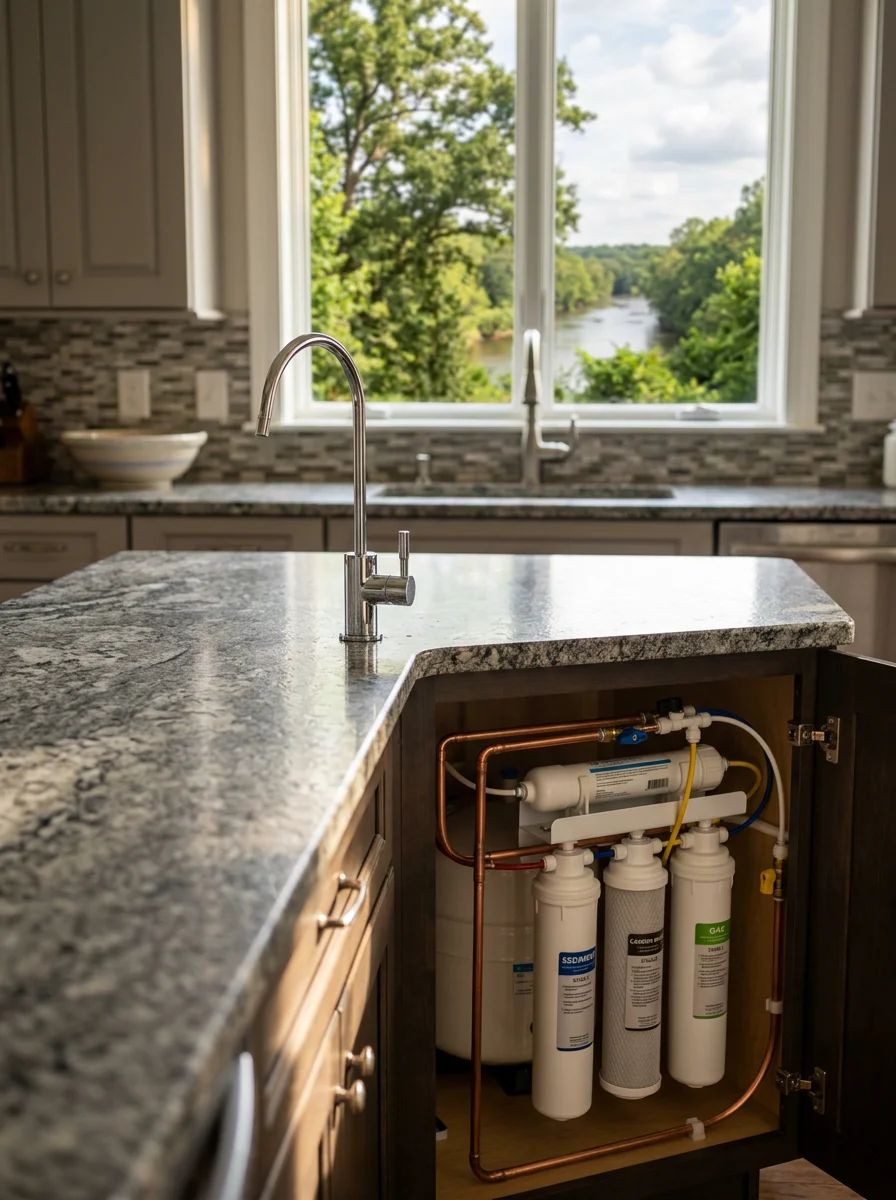
A reverse osmosis system mounted under a kitchen sink in a Charlotte home, with a slim RO faucet installed through the countertop and the Catawba River watershed visible through the window.

Charlotte, NC

Water Purification Service

Catawba River Water Filtered for Every Tap in Your Home

Charlotte's water comes from Lake Norman and Mountain Island Lake, both Catawba River reservoirs. Chloramine disinfection at the Franklin, Vest, and Lee S. Dukes treatment plants keeps the water bacterially safe, but it also produces trihalomethanes and haloacetic acids as byproducts. Independent testing has found some of those byproducts at levels above the Environmental Working Group's health-protective guidelines. A whole house carbon filtration system reduces those compounds before they reach your shower, your cooking water, and your children's bath.

Charlotte's rapid growth has created a housing stock that ranges from early 1900s bungalows in Dilworth and Plaza Midwood to new builds in Steele Creek and Ballantyne. Older homes may have copper or galvanized plumbing that can pick up additional contaminants between the treatment plant and the tap. Newer homes have modern pipes but the same source water. An RO system at the sink addresses what arrives at the faucet regardless of what the pipes look like between the street and the kitchen.

PFAS have been detected in Charlotte's water supply at low levels, and while those levels are currently below the EPA's 2024 enforceable limits, reverse osmosis is the residential technology confirmed to reduce PFAS to near non-detection. We are a faith-based business built on referrals, and we give Charlotte families the same honest assessment we give every customer: what your water actually contains, and what system actually addresses it.

At a glance

  • Serving Harrisonburg, VA since 2026
  • Free written estimates with no obligation
  • Premium options most contractors don't carry — we explain the differences honestly
  • Responsive scheduling and clear communication from estimate to completion
Call (540) 820-5796

Every service, available in Charlotte, NC

Whole house water systems are well-suited to Charlotte homes because disinfection byproducts from chloramine treatment affect every tap, shower, and appliance, not just the kitchen faucet. RO systems at the sink give Charlotte families the highest level of filtration for drinking and cooking water, and are particularly effective at reducing PFAS compounds that have been detected in the Catawba River supply at low levels. UV light systems are relevant for any Charlotte-area property on a private well, including rural parcels in the outer Mecklenburg and Union County areas where well water is not connected to Charlotte Water. Well water treatment rounds out the service mix for those acreage properties where the municipal system does not reach.

What Charlotte, NC customers say.

Reviews are temporarily unavailable. Please check back soon.

Worked with us?

Leave a Review

Serving Charlotte, NC

Free on-site estimate. No commitment required.

Our crew knows Charlotte, NC. We will show up on time, assess the job honestly, and give you a clear written number before asking you to decide anything.

Call (540) 820-5796

Also serving across the Shenandoah Valley and Carolinas:

Water Purification Service FAQ for Charlotte, NC

Common questions from Charlotte, NC customers about our services, process, and coverage.

Charlotte Water uses chloramines to disinfect water drawn from the Catawba River, and that process produces trihalomethanes and haloacetic acids as byproducts. Independent testing has found some of these compounds above health-protective guidelines set by the Environmental Working Group. A whole house carbon filtration system reduces those byproducts at the point of entry, so every tap and shower in your home receives treated water.

PFAS have been detected in Charlotte's water at low levels, currently below the EPA's 2024 enforceable maximum contaminant levels. Standard municipal treatment does not fully remove PFAS. A point-of-use reverse osmosis system at the kitchen sink is the most effective residential technology for reducing PFAS in drinking and cooking water.

Older Charlotte neighborhoods like Dilworth and Plaza Midwood have homes built in the early to mid-1900s, and some of that plumbing has had decades to accumulate mineral deposits or develop small corrosion points. Water can pick up additional contaminants between the street main and your tap. An RO system at the sink filters what actually arrives at your faucet, regardless of the age of the pipes between the meter and the kitchen.

Yes. Rural parcels in outer Mecklenburg County and neighboring Union County often sit outside Charlotte Water's service area and rely on private wells. Well water in these areas can carry iron, hardness minerals, and bacteria that municipal water does not. We treat well water with systems sized to what a water test from that specific well shows, not a one-size approach.

Still have questions?

Call us directly. Real answers, no scripts.

Call (540) 820-5796

Proudly Based in Harrisonburg, VA

Stop by, call, or book online — we're always nearby when you need us.

Hours

  • Monday 8:00 AM - 1:00 PM
  • Tuesday 8:00 AM - 1:00 PM
  • Wednesday 8:00 AM - 1:00 PM
  • Thursday 8:00 AM - 1:00 PM
  • Friday 8:00 AM - 1:00 PM
  • Saturday 8:00 AM - 1:00 PM
  • Sunday Closed

Get a Free Estimate